Marcello Sordi

Marcello Sordi
ENGLISH
Marcello Sordi writes like someone climbing a staircase without knowing where it ends.
He started with philosophy, the question that doesn't want an answer, it wants a birth, and from there came dialogues between Heraclitus and Parmenides, between Abraham and an Aboriginal elder, between a thirteenth-century French demon and the modern mind, because he doesn't write about philosophy, he stages encounters and lets the ideas collide.
Thought, for him, never stays in the head, he made a full-scale reproduction of Michelangelo's Pietà, in oil on wood, just to understand from the inside what's left when you let only the essential stay visible.
When his son asked for a story that would teach art instead of just entertaining him, he wrote that story too. And when midlife arrived for him and for his partner, he spent over a year inside hidden social media groups listening to men and women speak about perimenopause, and out of those testimonies built, No One Told Me.
If there's a thread, it's this: he doesn't write to be right, he writes to find out where the question takes him, even if that means stepping out of the philosophical temple and into the bedroom of a marriage in transition.
PORTUGUÊS
Marcello Sordi escreve como quem sobe uma escada sem saber onde ela termina.
Começou pela filosofia, a pergunta que não quer resposta, quer parto, e daí vieram diálogos entre Heráclito e Parmênides, entre Abraão e um aborígene, entre um demônio francês do século XIII e a mente moderna, porque ele não escreve sobre filosofia, ele monta encontros e deixa as ideias colidirem.
O pensamento, nele, nunca fica só na cabeça, fez uma reprodução em tamanho real da Pietà de Michelangelo, em óleo sobre madeira, só pra entender por dentro o que fica quando se deixa apenas o essencial visível.
Quando o filho pediu uma história que ensinasse arte em vez de só entreter, escreveu essa história também. E quando a meia-idade chegou pra ele e pra sua companheira, passou mais de um ano em salas escondidas de redes sociais ouvindo homens e mulheres falarem sobre perimenopausa, e desses depoimentos construiu, Ninguém Me Avisou.
Se tem um fio, é este: ele não escreve para ter razão, escreve para descobrir onde a pergunta o leva, mesmo que isso signifique sair do templo filosófico e entrar no quarto de um casamento em transição.
ESPAÑOL
Marcello Sordi escribe como quien sube una escalera sin saber dónde termina.
Empezó por la filosofía, la pregunta que no quiere respuesta, quiere parto, y de ahí vinieron diálogos entre Heráclito y Parménides, entre Abraham y un aborigen, entre un demonio francés del siglo XIII y la mente moderna, porque él no escribe sobre filosofía, él monta encuentros y deja que las ideas choquen.
El pensamiento, en él, nunca se queda solo en la cabeza, hizo una reproducción a tamaño real de la Pietà de Miguel Ángel, en óleo sobre madera, solo para entender desde dentro qué queda cuando se deja visible únicamente lo esencial.
Cuando su hijo le pidió una historia que enseñara arte en vez de solo entretener, escribió esa historia también. Y cuando la mediana edad llegó para él y para su compañera, pasó más de un año dentro de grupos escondidos en redes sociales escuchando a hombres y mujeres hablar sobre la perimenopausia, y de esos testimonios construyó, Nadie Me Avisó.
Si hay un hilo, es este: él no escribe para tener razón, escribe para descubrir adónde lo lleva la pregunta, aunque eso signifique salir del templo filosófico y entrar al dormitorio de un matrimonio en transición.
ENGLISH
Marcello Sordi writes like someone climbing a staircase without knowing where it ends.
He started with philosophy, the question that doesn't want an answer, it wants a birth, and from there came dialogues between Heraclitus and Parmenides, between Abraham and an Aboriginal elder, between a thirteenth-century French demon and the modern mind, because he doesn't write about philosophy, he stages encounters and lets the ideas collide.
...
Books
View All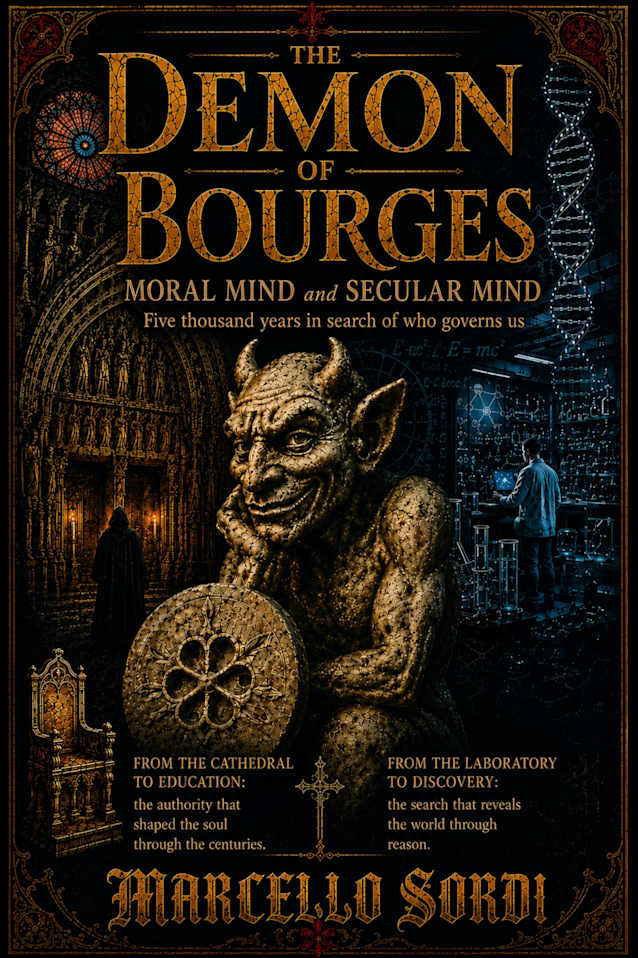
The Demon of Bourges
THE DEMON OF BOURGES
Who governs humanity?
For more than five thousand years, civilizations have built temples, not merely as places of worship, but as centers of power, knowledge, law, and identity.
From the ziggurats of Mesopotamia to the pyramids of Egypt...
From the Parthenon of Athens to the Temple of Jerusalem...
From Rome’s institutions to the...
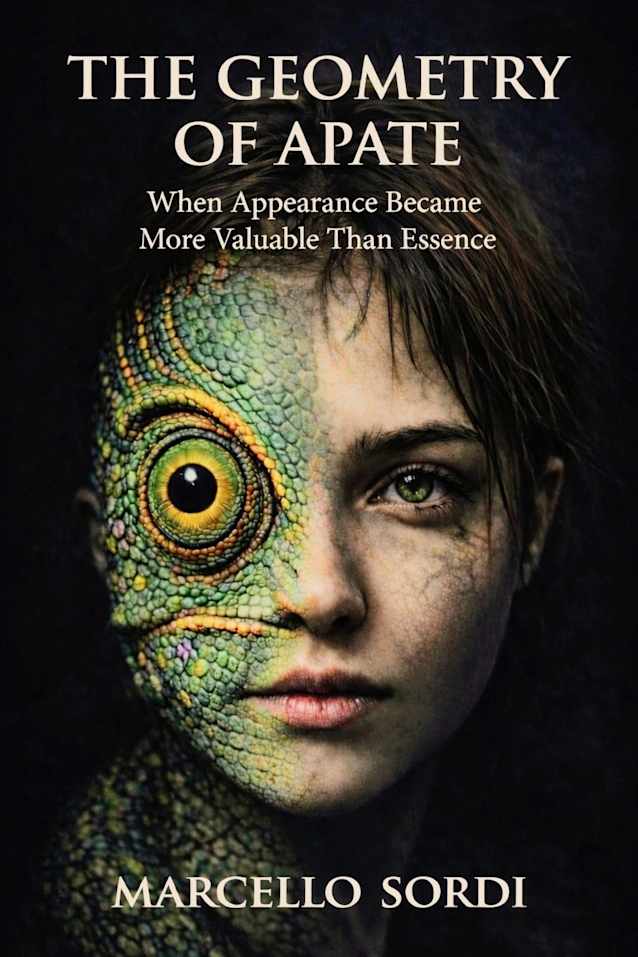
The Geometry of Apate: When appearance became more valuable than essence.
YOU ARE BEING DECEIVED (AND IT MIGHT BE SAVING YOUR LIFE)
Without the veil of appearance, you would be an easy target. But what if lying is not a moral failure, but evolution’s most sophisticated technology?
Before the first human word, life already knew how to deceive. From the chameleon dissolving into the foliage to avoid being devoured, to...
Read more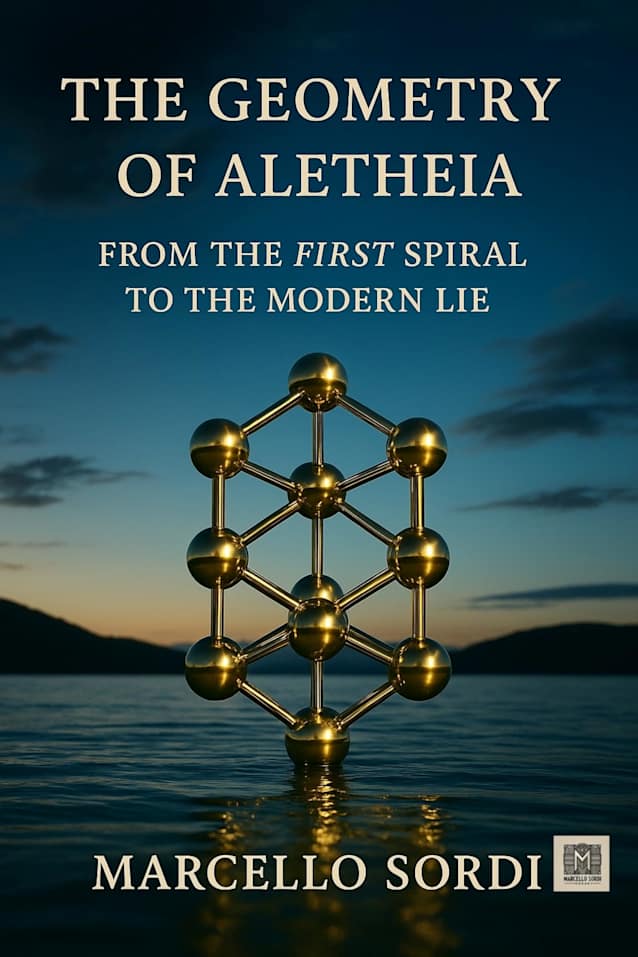
THE GEOMETRY OF ALETHEIA: From the first spiral To the modern lie
There is a language that precedes words. It isn’t spoken; it reveals itself. It’s in the curve of a seashell, the pattern of a leaf, the spiral of a galaxy, and the quiet space between two gestures.
This book begins from that very place: the intuition that form is not just appearance, but memory. Not merely a structure, but a trace of something...
Read more